
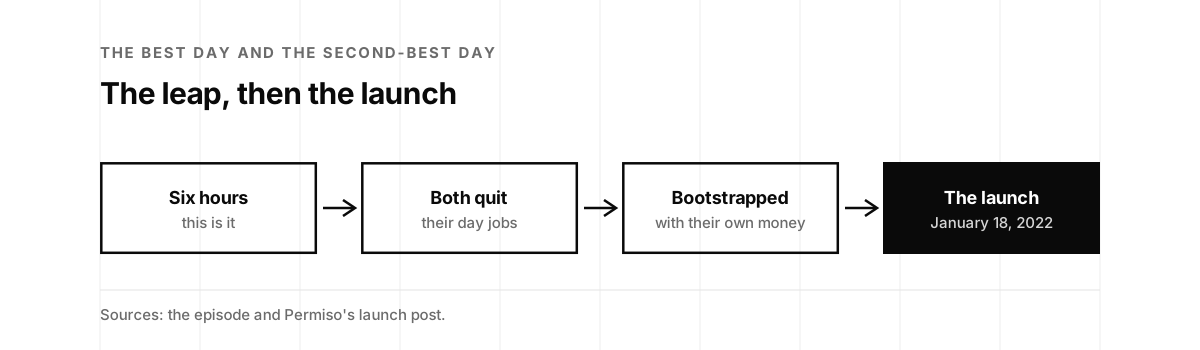
Episode 13 of The Security Podcast of Silicon Valley aired on February 3, 2022, with Jon McLachlan hosting. The guest was Paul Nguyen, co-founder and co-CEO of Permiso Security (Podbean, Apple Podcasts, Spotify). The episode is called “Paul Nguyen, Co-Founder and Co-CEO of Permiso Security, On Innovating Security Postures.” On the tape, Paul says Permiso launched two days earlier. Permiso’s launch post is dated January 18, 2022 (Permiso).
Paul’s case for the company fits in one line. Cloud security, he said, is the data center years all over again.
“what we’re seeing in the cloud security market is basically just history repeating itself.”
Paul Nguyen, at 1:38
This page follows the conversation in order: a section for each part of it, sixteen figures, thirteen clips from the tape, a LinkedIn post, a talk on YouTube, the full transcript, and five tools: a quiz, a scorecard for whether your cloud is repeating history, a calculator for what a wrong-fit yes costs, a timeline, and a to-do list. Where the decodes of the tape disagree on a word, the transcript puts its best guess in brackets, and the page doesn’t quote or retell those words.
Two co-CEOs
Jon opened with Paul’s title. Paul said the co-CEO part is always the fun part, and people ask why. He and his co-founder had each been a CEO before, and this time both tried not to be one. Paul tries to fire himself as co-CEO every day and make Jason the CEO, he said, and Jason doesn’t want that.
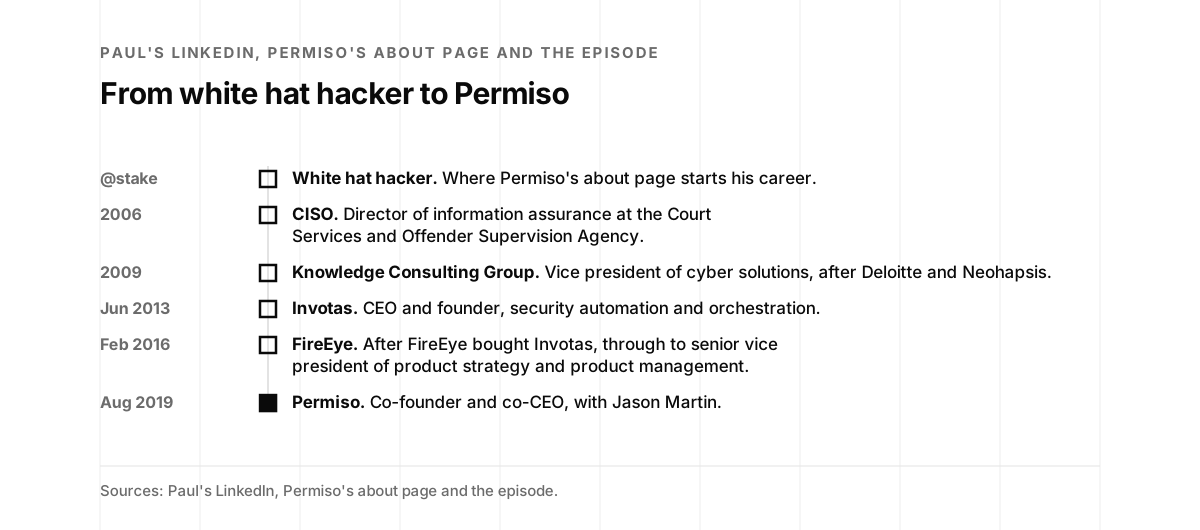
Jon pointed out that Permiso isn’t Paul’s first startup, and that he studied at Carnegie Mellon. Paul said he has been in the industry for almost two decades. His LinkedIn lists a master’s in information technology management from Carnegie Mellon, with a focus on information security, and a bachelor’s in business administration from its Tepper School of Business. Before Permiso, it lists FireEye, Invotas, Knowledge Consulting Group, Neohapsis, Deloitte, and a CISO role at the Court Services and Offender Supervision Agency (LinkedIn). Permiso’s about page adds that he started as a white hat hacker at @stake (Permiso).
History repeating itself
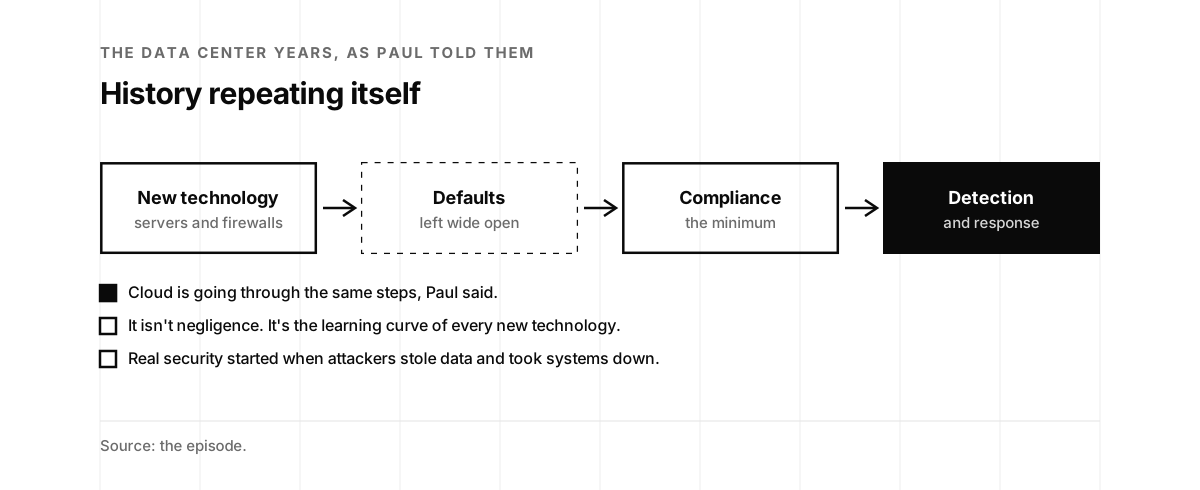
Jon asked what Permiso does. Paul started with the market. When data centers were new, he said, people stood up servers and firewalls and did things that were probably not the most secure. They didn’t know any better. People were unpacking firewalls, he said, and:
“setting them up with default credentials and leaving them wide open for attackers”
Paul Nguyen, at 2:02
He doesn’t blame the people who did it. It happened, he said:
“not because of negligence, but just because of the learning curve you have to go through”
Paul Nguyen, at 2:09
Then came the order of events. Compliance is the start of security, in his telling, and the minimum you have to do. Real security started when attackers began to steal data and take systems down, and detection and response products came along to fill that gap. Cloud, he said, is going through the same steps.
Permiso’s launch post makes the same point. After 20 years in security, Paul wrote, cloud felt like “a bit of déjà vu” (Permiso).
Ahead of today’s problem
Paul and his co-founder wanted a problem that wasn’t today’s.
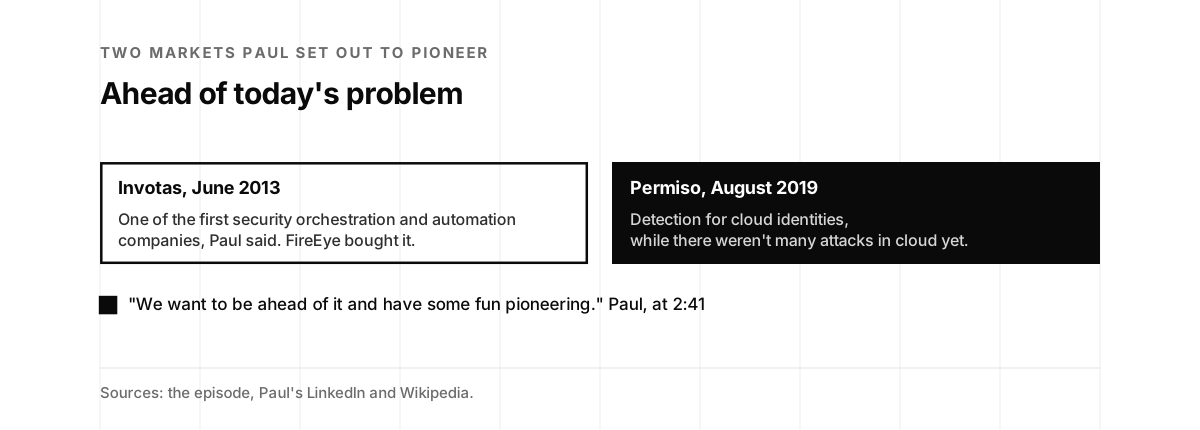
“We want to be ahead of it and have some fun pioneering.”
Paul Nguyen, at 2:41
He had done it before. His previous startup was one of the first security orchestration and automation companies, he said, and he got hooked on proving to people that a new market is a real one. His LinkedIn lists that startup as Invotas, “Pioneering the space for Security Automation and Orchestration,” from June 2013 to February 2016 (LinkedIn). Wikipedia lists FireEye’s purchase of Invotas, an IT security automation company, after it bought iSIGHT Partners in January 2016 (Wikipedia). Tools in that category let a security team respond to some incidents automatically (Wikipedia).
In cloud, Paul saw a gap of the same kind, and a reason it was still early:
“there’s not a ton of attacks happening yet in cloud.”
Paul Nguyen, at 3:05
Identity, detection and response
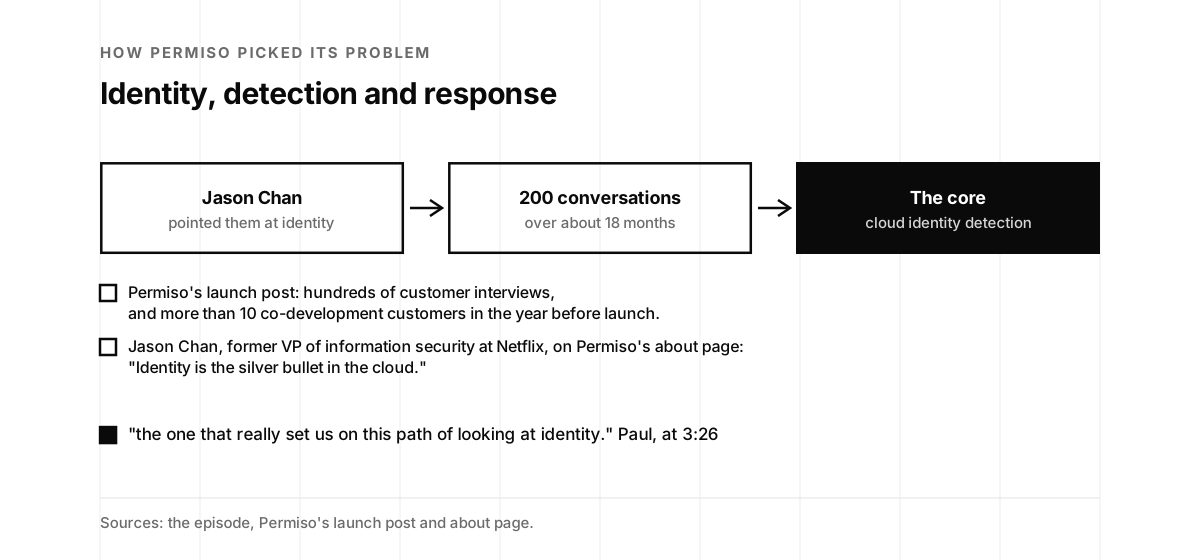
The direction came from Jason Chan, Paul said, one of Permiso’s first angel investors and a friend of 20 years. Paul introduced him as head of security at Netflix, and as:
“the one that really set us on this path of looking at identity.”
Paul Nguyen, at 3:26
So they paired identity with detection and response, he said. After 200 customer conversations, Paul said, they knew they had it, and cloud identity detection and response became the core. Jon checked the number. The conversations took about 18 months, Paul said.
Permiso’s launch post calls the product “the first of its kind in cloud identity detection and response.” It counts hundreds of customer interviews and more than 10 co-development customers in the year before launch (Permiso). Permiso’s about page quotes Jason Chan, former VP of information security at Netflix: “Identity is the silver bullet in the cloud.” (Permiso).
Wikipedia describes identity threat detection and response as a discipline that protects identity infrastructure from attacks. It’s especially relevant across several clouds, Wikipedia adds, because of the gaps between each provider’s identity and access systems (Wikipedia).
Six degrees of Kevin Bacon
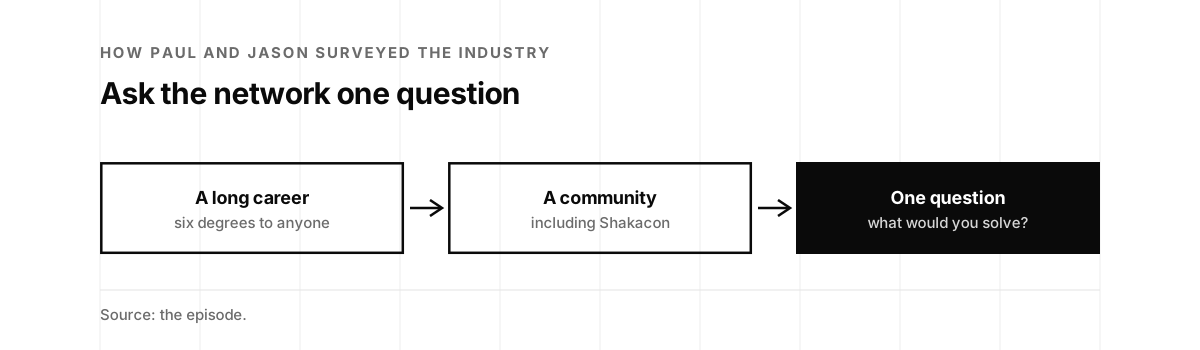
A long career in this industry buys reach, Paul said:
“you pretty much have six degrees of Kevin Bacon to anyone that you want to talk to, right?”
Paul Nguyen, at 3:53
Six Degrees of Kevin Bacon is a parlor game that links an actor to Kevin Bacon through the films they appeared in, on the idea that anyone in Hollywood is within six steps of him (Wikipedia). Investors claim access too, Paul said, and he and Jason had it between them. Jason runs a hacker conference in Hawaii called Shakacon, he said. Permiso’s about page lists Jason Martin, Paul’s co-founder, as its organizer (Permiso).
They used that community to survey the industry. They asked people about their problems, and what they would solve if they could solve anything by magic.
Three to five years out
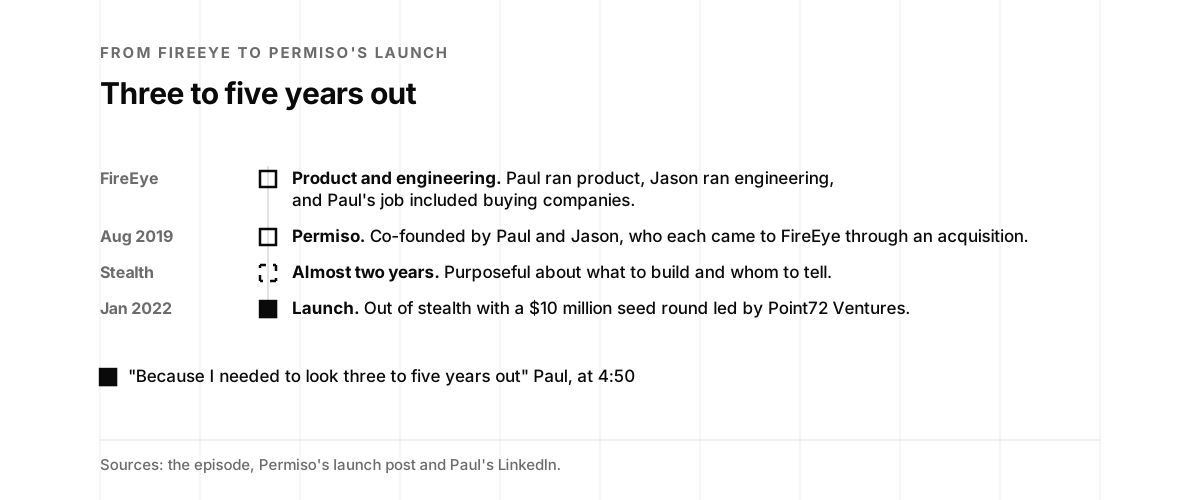
Paul ran product at FireEye, which he called almost a billion-dollar business, and Jason ran the engineering side. Part of Paul’s job was corporate development: buying companies to fill out the portfolio. That meant watching where every company was positioned.
“Because I needed to look three to five years out”
Paul Nguyen, at 4:50
That view informed what became Permiso, he said. It took almost two years to come out of stealth, and they were deliberate about where to go, what to build and whom to tell.
Permiso’s launch post says Paul and Jason “each joined FireEye separately via acquisitions” of their previous companies, Invotas and Secure DNA. It names Paul as FireEye’s senior vice president of product strategy and product management, and Jason as executive vice president of global engineering and security products (Permiso). Paul’s LinkedIn dates Permiso from August 2019 (LinkedIn).
Trust, and no ego
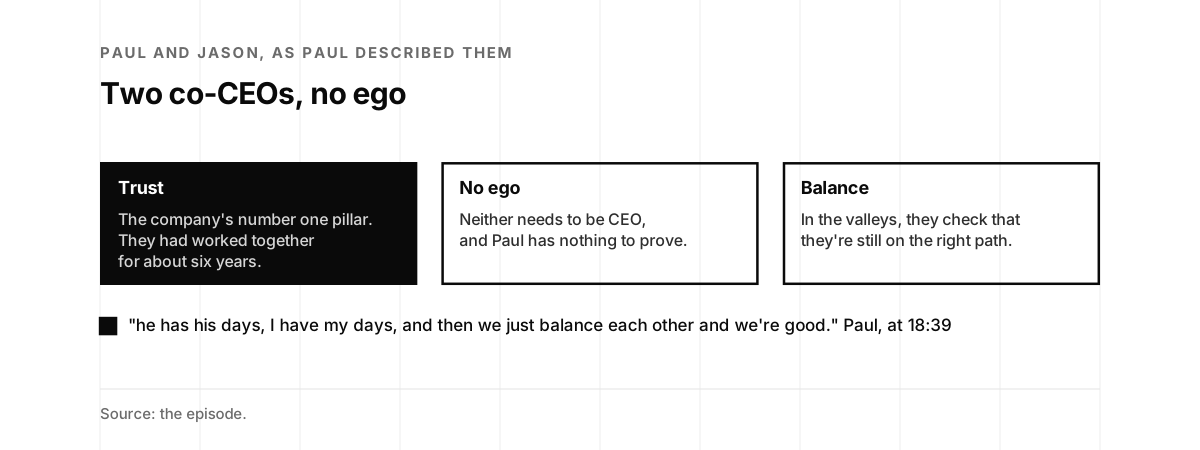
Jason Martin is Paul’s co-founder and co-CEO. Paul called him the better-looking and smarter one, and said they had worked together for about six years. Jon said trust between co-founders matters a lot. Paul agreed: trust was the company’s number one pillar.
“And the good thing is, neither of us have an ego.”
Paul Nguyen, at 6:12
Neither needs to be CEO, he said, and he has nothing to prove past building something interesting with people he wants to work with every day. That’s the part of startups he gets hooked on: a culture built from the ground up. A big company is a little too big of a machine for him, with its politics and bureaucracy. Jon, who has worked at both, said the grass is always greener on the other side.
The kid who took things apart
Jon asked whether a story from Paul’s childhood shaped who he is. Paul said he was always the kid who took things apart to see how they worked. He destroyed most of his toys, he said, and called it an engineer’s mentality: he likes to build stuff. He always had a natural curiosity about how things worked, and he learned to program games on a Commodore 64.
He planned to be an investment banker, he said. Then he got exposed to security at Carnegie Mellon, home of a computer emergency response team. Wikipedia calls the CERT Coordination Center the first organization of its kind, set up in Pittsburgh in November 1988 at DARPA’s direction after the Morris worm (Wikipedia). Jon said Carnegie Mellon is one of the best universities out there for computer science and security.
A CISO without a budget
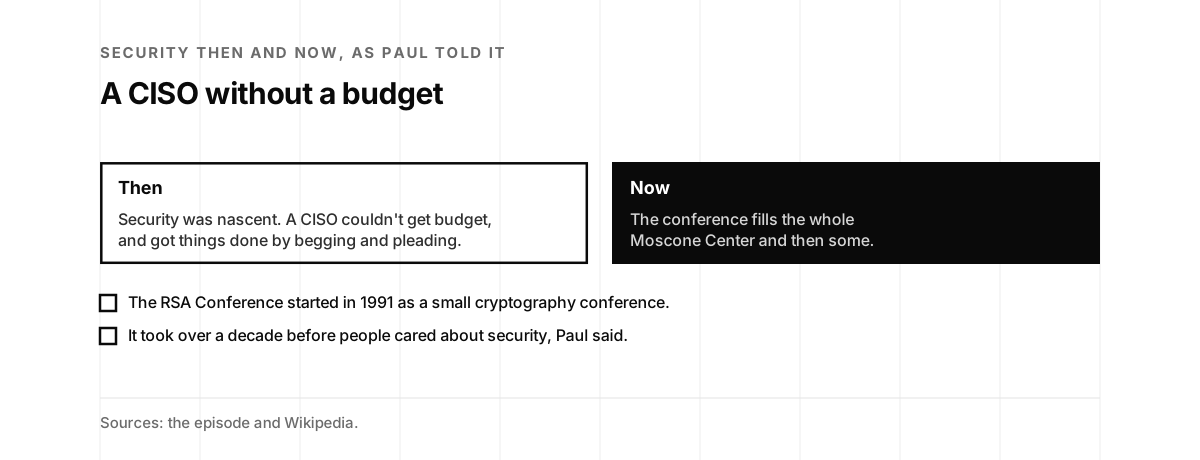
Security was still nascent and emerging, Paul said, and it took over a decade before people cared. He was a CISO somewhere in between.
“being a CISO at the time was not enjoyable, because you basically couldn’t get any budget, and you couldn’t get anything done without begging and pleading.”
Paul Nguyen, at 9:15
Now the conference takes up the whole Moscone Center and then some, he said, and it wasn’t like that back then. The RSA Conference started in 1991 as a small cryptography conference (Wikipedia). Paul’s LinkedIn lists his CISO role, as director of information assurance at the Court Services and Offender Supervision Agency, from 2006 to 2007 (LinkedIn).
Manufacture luck
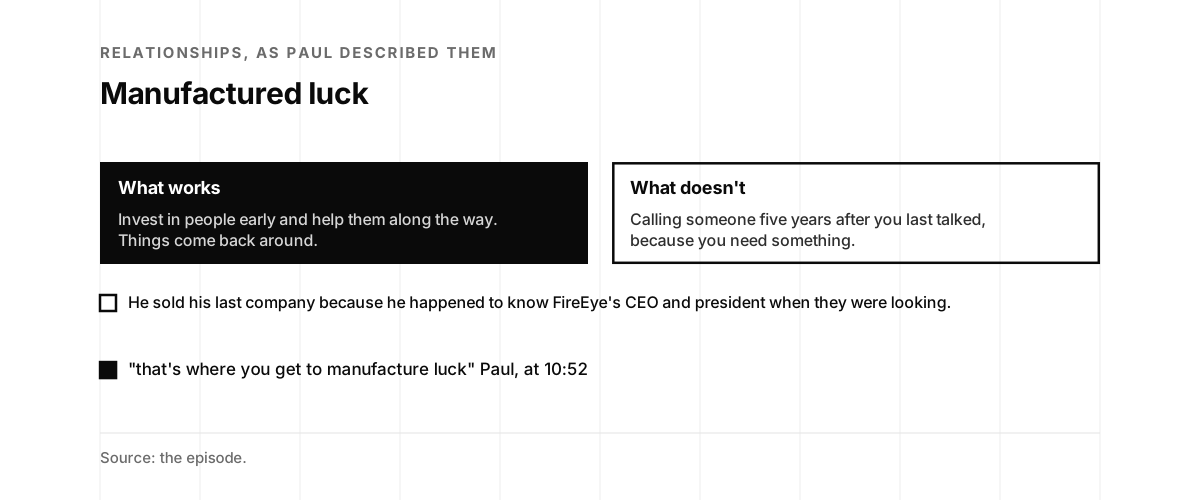
Jon asked for one truth most people miss. Paul’s answer was relationships. Engineers tend to shy away from them, he said. He learned early from his first manager, who seemed to know everybody.
“that’s where you get to manufacture luck”
Paul Nguyen, at 10:52
The reason he sold his last company, he said, was that he happened to know the CEO and president of FireEye when they were looking for a company. What doesn’t work, in his telling, is calling someone five years after you last talked because you need something.
“So you have to actually invest in these relationships and help people along the way.”
Paul Nguyen, at 11:27
Jon put it in one line:
“It’s not about stuff, it’s not about the products, it’s about the people.”
Jon McLachlan, at 11:47
Love people, use things
Jon brought up a book by the Minimalists with the whole message in its title: Love People, Use Things, Because the Opposite Never Works. You can summarize the book with the title, he said, and you don’t have to buy it. Wikipedia lists Love People, Use Things (2021) among the work of the Minimalists, Joshua Fields Millburn and Ryan Nicodemus (Wikipedia). Jon said he learned that lesson much later in his career than Paul did.
Show them the bad parts
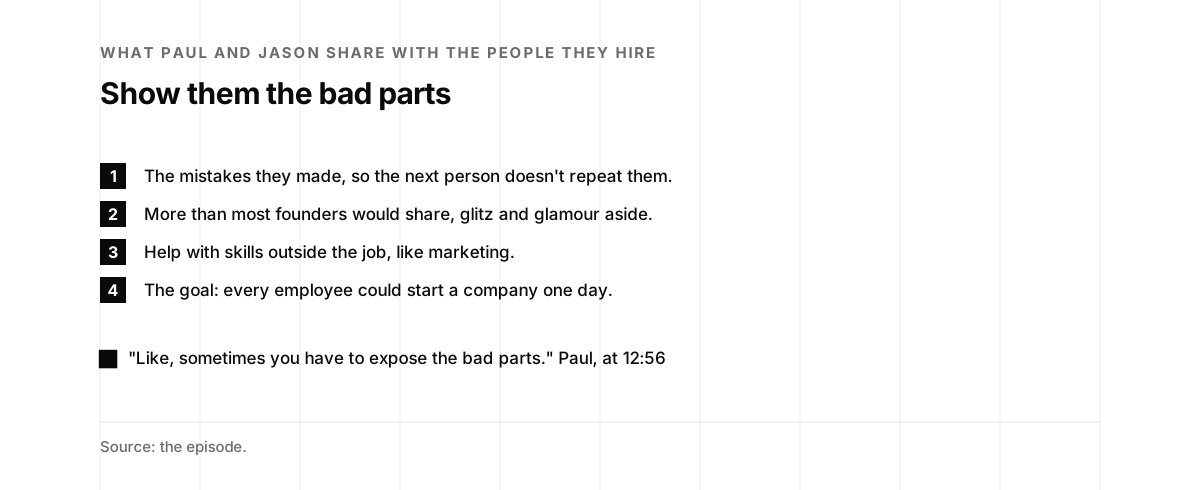
Mentorship is big for Paul. With every new hire, he said, he and Jason offer what they learned from their own mistakes.
“the last thing we want to do is have you make the same mistake.”
Paul Nguyen, at 12:38
So they share more than most founders would, he said, including the parts that aren’t glitz and glamour.
“Like, sometimes you have to expose the bad parts.”
Paul Nguyen, at 12:56
Jon agreed that people learn from those parts. Then they ask to learn things outside their job, Paul said, like marketing. He and Jason also angel invest, and they mentor strong technical founders on the market side. Paul’s LinkedIn lists an investment in Truffle Security from January 2022 (LinkedIn). He wants to build the next set of entrepreneurs, he said, and would love to see every employee start a company. He still goes to his own mentors in times of crisis.
The day they decided
Jon asked for the best day at Permiso so far. The best day was when they started it, Paul said. Jon asked what started meant: the idea, meeting a co-founder, incorporating or funding. Paul named the day he flew out to see Jason. They spent six hours on it, he said, and finally said, okay, this is it: they would both quit.
“it’s big, because you take that leap.”
Jon McLachlan, at 15:09
Jon brought up the security of a steady paycheck, the RSUs and the options. Paul said they had done well before, and he could have ridden out a job for a long time. Being repeat founders made it less of a risk, he said, but still a risk. They put everything into the business and bootstrapped it themselves.
“And we wanted to be on our own terms and make our own mistakes.”
Paul Nguyen, at 15:58
The second-best day
The second-best day was the launch, Paul said, when you get to tell everyone what you’re doing and find out whether it gets massive fanfare. He’s much more comfortable and even keel than he was back then, when it was super stressful. A repeat founder, he said, knows how to deal with the emotional side.
Jon said Paul had been there, done that and got the t-shirt. Paul said they were both at big companies and did the executive thing. He isn’t a big company person, he said, but FireEye was a good education. Jon said Paul kept his learning hat on: humble and hungry.
Nine times out of ten
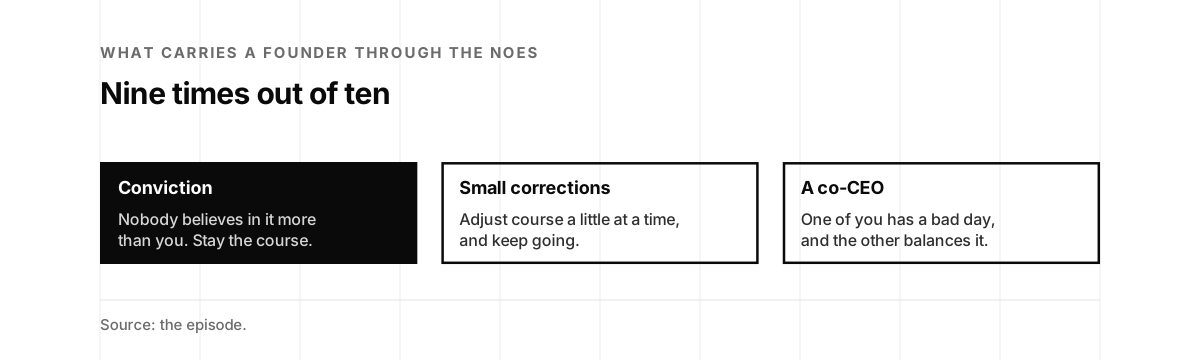
Jon asked about the worst day. There isn’t one day, Paul said, but there are peaks and valleys. Rejection still stings, even when you’re used to it, and a big customer can turn out not to be one. Over the years, he said, he learned that you hear no far more often than yes. In a market you’re pioneering, it’s no nine times out of ten. Nobody can have more conviction about it than you, he said, so make small corrections and stay the course.
That’s where a co-CEO helps, he said. They check with each other that they’re still on the right path.
“he has his days, I have my days, and then we just balance each other and we’re good.”
Paul Nguyen, at 18:39
No goes both ways
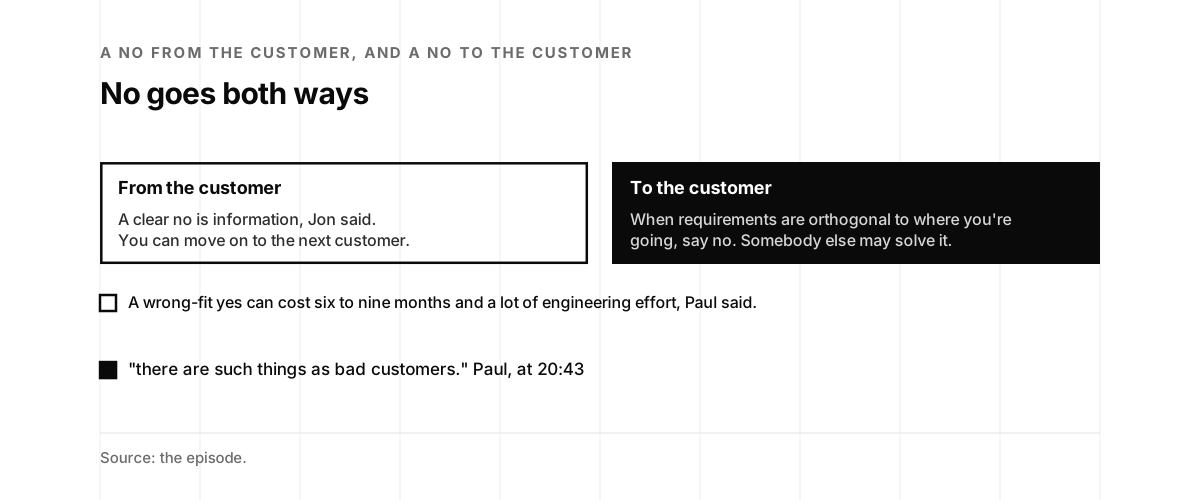
Jon said he envies founders who hear a clear no. Discussions often drag on, he said, and a no is information: you can move on to the next customer.
Paul said honesty gets you an answer. It may not be a good fit, and nobody’s time should be wasted. He called himself the more direct of the two co-founders, and Jason the nicer one.
“you could be firm without being aggressive.”
Jon McLachlan, at 20:09
Time is the most precious thing he has, Paul said. He has told customers he’ll come down himself to make sure a deal is good for them, and that he’ll tell them when it isn’t good for Permiso.
“there are such things as bad customers.”
Paul Nguyen, at 20:43
Not bad in behavior, he said: just not a fit for where he wants the company to be. When a customer’s requirements are orthogonal to where Permiso wants to go, somebody else may solve that problem.
“you start going down tangents that take you off course.”
Paul Nguyen, at 21:29
Six to nine months and a lot of engineering effort can go to the tangent, he said. He tells first-time founders to have conviction and be decisive, because of what happens when you get pulled in 50 different directions:
“you’ll end up dying by a thousand cuts”
Paul Nguyen, at 21:52
Jon summed it up.
“I didn’t think of it that way: no, being a two-way street.”
Jon McLachlan, at 22:03
Paul agreed: he looks at it as a two-way street.
The calculator further down puts numbers on a wrong-fit yes.
Success without an exit
Jon asked what success looks like for Permiso. Most people measure it by an IPO or an exit, Paul said, and he doesn’t need one.
“I’m not looking for a specific outcome of, I need to sell this thing by X date, or I need to IPO.”
Paul Nguyen, at 23:30
Five years out, he said, success is still having fun, with happy customers, happy employees and a sustainable business. He called himself a walking CEO, the annoying one who walks to people’s desks to ask what they’re working on. Jon said Paul just wants to be involved.
“It’s more about enjoying the experience”
Paul Nguyen, at 23:43
Hiring after the seed
Jon congratulated Paul on the $10 million seed round. Permiso’s launch post says Point72 Ventures led it, with Foundation Capital, Work-Bench, 11.2 Capital and Rain Capital, and angels including Jason Chan (Permiso).
“We’re hiring like crazy on the engineering side.”
Paul Nguyen, at 24:36
It’s still early, Paul said. The first priority is what existing customers have asked for, and the partners who give Permiso their time. The launch got coverage in Dark Reading, VentureBeat, TechCrunch and SecurityWeek, he said, and brought in people who wanted to work with them. He hoped to triple the engineering team within a couple of months. Jason once had 1,300 engineers working for him, Paul said.
“So we’re humbled that people would want to take a risk”
Paul Nguyen, at 25:53
No vaporware
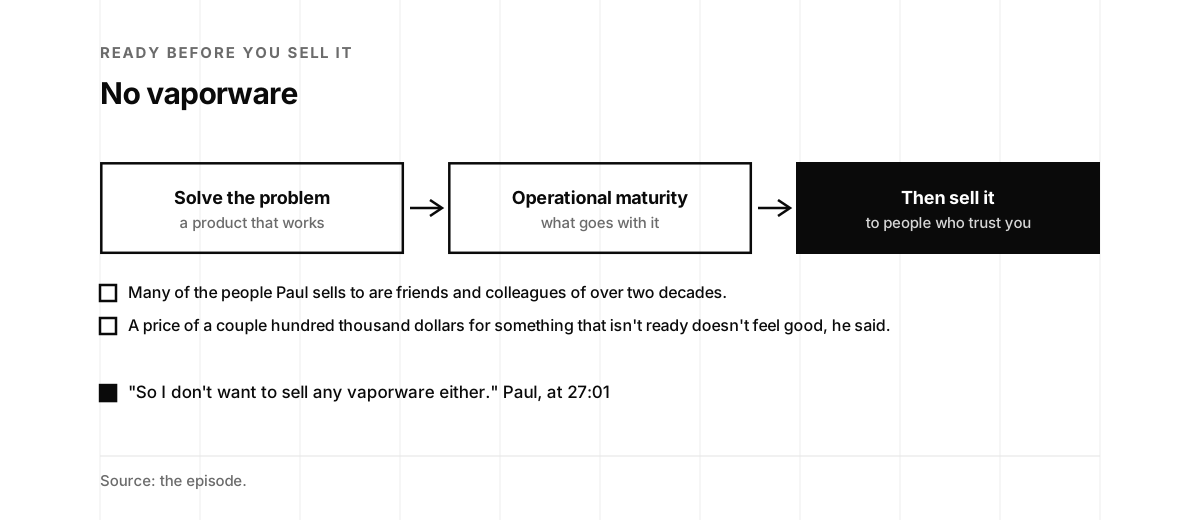
Permiso isn’t in super sales mode, Paul said. He wants a product that solves the customer’s problem before he pushes it, and he has been pushed to sell a product too early before. Jon added the operational maturity that has to go with a product.
Paul tied it back to relationships. Many of the people he sells to are friends and colleagues of over two decades, and he doesn’t want to disappoint them.
“So I don’t want to sell any vaporware either.”
Paul Nguyen, at 27:01
He and Jason have a reputation to keep, he said:
“we always try to do right by our customers.”
Paul Nguyen, at 27:11
Asking someone to pay a couple hundred thousand dollars for a product that isn’t ready doesn’t feel good, he said. Jon said a relationship with a customer is the same as one with a friend.
Your favorite Avenger
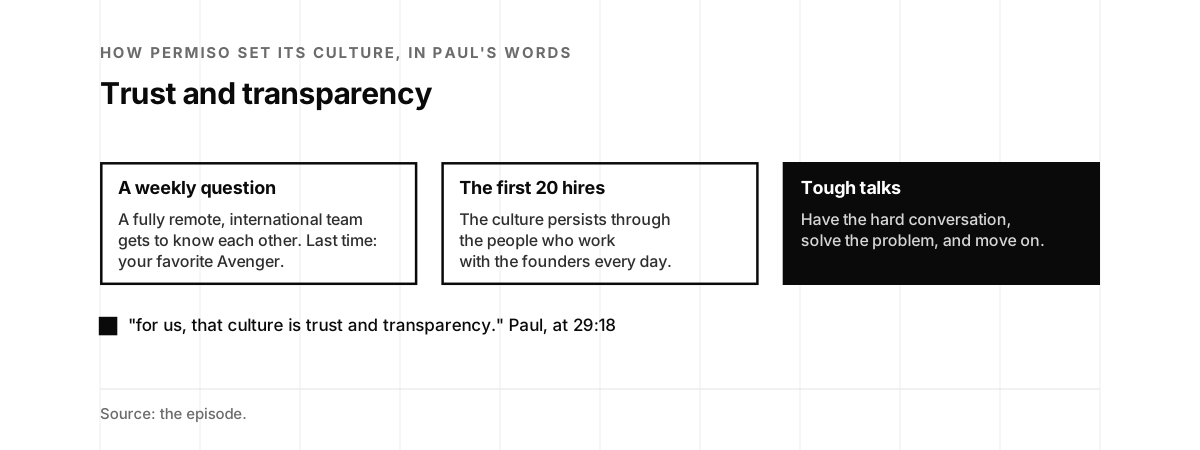
Jon asked for a favorite interview question. Paul answered with a weekly get-to-know-each-other question, because Permiso is fully remote and widely distributed internationally. The last one asked for everyone’s favorite Avenger. It set off a debate about Marvel and DC, he said, and the team got to nerd out about comic books. Jon said culture comes from the leadership. Paul said he tells everyone about the first 20 hires: as a company grows, the culture persists through the people who worked with the founders every day. So Permiso works on it early.
“for us, that culture is trust and transparency.”
Paul Nguyen, at 29:18
Part of it is his style, he said: have the tough conversation, solve the problem and move on. He doesn’t want things to fester.
Jon took it further:
“A disagreement is a wonderful thing in my books”
Jon McLachlan, at 29:48
Someone learns something new about how the world works, he said, or sees it from another set of experiences.
Build those relationships
Jon asked for parting words of wisdom.
“build those meaningful relationships, and they will yield in both a lot of ways, personally and professionally, over time.”
Paul Nguyen, at 30:32
Jon seconded it.
What happened after the tape
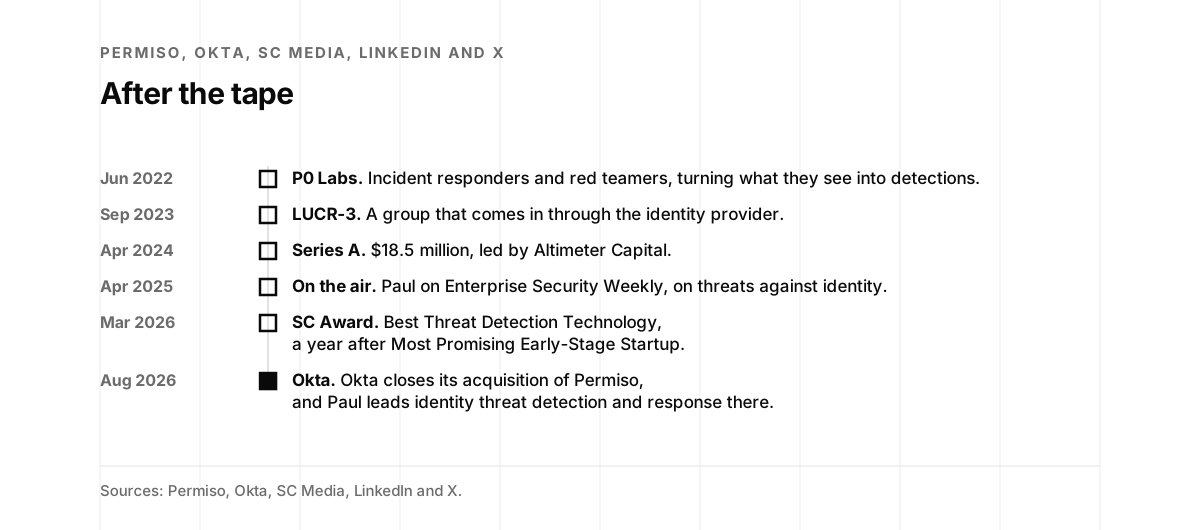
P0 Labs. On June 21, 2022, Permiso introduced P0 Labs, a team of incident response and red team experts led by Ian Ahl. Its job was to turn front-line incident response knowledge into runtime detection (Permiso).
SOC 2 Type I. On August 15, 2022, Jason Martin announced that Permiso was SOC 2 Type I certified (Permiso).
What the first year caught. On February 6, 2023, P0 Labs wrote that the suspicious and malicious behavior Permiso detected in 2022 had gone undetected by existing threat detection and monitoring tools. Those environments ran SIEMs and cloud security tools (Permiso).
LUCR-3. On September 20, 2023, P0 Labs described LUCR-3, a financially motivated group that overlaps with Scattered Spider. It uses the identity provider as its way in and steals intellectual property for extortion (Permiso). On the tape, Paul said there weren’t many attacks in cloud yet. Ian Ahl, who led P0 Labs, walked through LUCR-3 at fwd:cloudsec in 2024. The notes for Paul’s Enterprise Security Weekly segment link the talk.
A Series A. On April 3, 2024, Permiso announced an $18.5 million Series A led by Altimeter Capital, with Point72 Ventures. The post cites six- and seven-figure license deals with Fortune 500 customers (Permiso).
On other shows. Paul was on the Talking Cloud Podcast on March 17, 2025 (Podbean). On April 7, 2025, he talked on Enterprise Security Weekly #401 about threats against identity, insider threats and non-human identity compromise (SC Media).
Two SC Awards. Permiso won Most Promising Early-Stage Startup at the 2025 SC Awards, announced during the RSA Conference (Permiso). On March 24, 2026, during RSAC 2026, it won Best Threat Detection Technology (Permiso).
A free inventory. On June 10, 2025, Permiso announced Permiso Discover, an inventory of human, non-human and AI identities, with a waitlist (Permiso).
Research on X. On June 16, 2026, Permiso posted P0 Labs research on a deprecated Google Cloud log field and what it means for detection coverage (X).
Okta. Okta signed a definitive agreement to acquire Permiso and closed the deal on August 26, 2026. Okta describes Permiso as a cloud-native identity security platform for human, non-human and agentic identities, and says its signals, behavioral analytics and detections will give the Okta Platform identity threat detection and response (Okta). In the release, Paul says the combined teams will help security teams “gain deeper visibility into identity risks.” Okta is an identity and access management company founded in 2009 (Wikipedia). Paul’s LinkedIn lists him as Okta’s vice president of identity threat detection and response from August 2026 (LinkedIn).
Paul on Permiso joining Okta.
Paul Nguyen · August 27, 2026
More on this site. On episode 50, Alan Braithwaite of RunReveal walked through the stack a SIEM buyer ends up with, all of it aimed at detection and response. On episode 60, Damon Fleury of SpyCloud described a stolen log as a list of doors to close. On episode 92, Jasson Casey of Beyond Identity said identity sees everything. On episode 76, Michael Nov of Prime Security named his proudest day as a founder.
Did you catch it? A seven-question quiz
Seven questions from the episode. Each answer links the moment in the transcript or its section.
Quiz · seven questions
Did you catch it?
Pick an answer to see whether you caught it.
-
What did Paul say the cloud security market is repeating?
a. "what we're seeing in the cloud security market is basically just history repeating itself." Transcript, 1:38.
-
Who set Paul and Jason on the path to identity?
b. Jason Chan, a friend of 20 years. See Identity, detection and response.
-
How many customer conversations came before they settled on cloud identity detection and response?
c. 200, over about 18 months. See Identity, detection and response.
-
What did Paul say you get from investing in relationships?
a. "that's where you get to manufacture luck" Transcript, 10:52.
-
In a market you're pioneering, how often did Paul say you hear no?
b. Nine times out of ten, so you need the conviction. See Nine times out of ten.
-
What can a yes to a wrong-fit customer cost, in Paul's telling?
c. Months of engineering on a tangent. See No goes both ways.
-
What two pillars did Paul say Permiso's culture stands on?
a. "for us, that culture is trust and transparency." Transcript, 29:18.
Is your cloud repeating history?
Eight questions on whether your cloud looks like the data center years Paul described, or like what came after them. Each tip quotes the tape or paraphrases it, and links its section.
Scorecard · eight questions
Is your cloud repeating history?
Answer for your company as it runs today. If two answers fit, pick the lower one.
-
Do you know every identity in your cloud, human and non-human?
- We have no inventory
- People yes, service accounts and keys in part
- One inventory of people, service accounts, keys and agents, kept current
Permiso was built on identity. See Identity, detection and response.
-
Are default credentials and long-lived keys gone?
- We haven't checked
- Mostly, with known exceptions
- Yes, and a check alerts when one appears
"setting them up with default credentials and leaving them wide open for attackers" See History repeating itself.
-
Do you detect unusual identity behavior, or only misconfigurations?
- Neither
- Misconfigurations only
- Both, including odd sign-ins, new keys and privilege changes
In the data center years, detection and response came after compliance. See History repeating itself.
-
Who reads your cloud and identity provider logs?
- Nobody, they're only stored
- Someone, when there's an incident
- An owner reviews the alerts every day
Permiso's first year found malicious behavior that other tools missed. See What happened after the tape.
-
Can you trace an action in the cloud to the person or workload behind it?
- No
- For people, not for services
- Yes, for people, services and agents
Permiso paired identity with detection and response. See Identity, detection and response.
-
Do you have a playbook for a compromised identity?
- No
- An informal one
- Written and practiced: disable, rotate, and review what it touched
LUCR-3 comes in through the identity provider. See What happened after the tape.
-
Is MFA enforced for identity provider admins and cloud root accounts?
- No
- For some of them
- For all of them, with phishing-resistant factors
The identity provider is the way in for groups like LUCR-3. See What happened after the tape.
-
Have you tested your detection against a known attack pattern?
- Never
- Once, a while ago
- Every quarter, against a pattern like a move from the identity provider into the cloud
Ian Ahl's talk walks through one pattern. See What happened after the tape.
Your cloud looks like the data center years: credentials and identities nobody watches. Start with an inventory of every identity, then remove default credentials and long-lived keys.
You have the basics, and detection on identity behavior is partial. Next, give the alerts an owner who reads them every day, and write the playbook for a compromised identity.
You watch identities as well as settings. Keep testing detection against known attack patterns, and keep the inventory current as keys and agents multiply.
What does a wrong-fit yes cost?
Paul said a yes to the wrong customer can cost six to nine months and a lot of engineering effort. This calculator counts the engineering.
Calculator
What does a wrong-fit yes cost?
Four numbers: the engineers a request pulls off course, the months it takes, what an engineer-month costs you, and what the deal brings in during its first year.
Engineering time on the yes: 18 engineer-months, at a cost of $360,000. That's 240% of what the deal brings in during its first year.
The calculator counts engineering time only. It leaves out what the deal brings in after its first year and what the work might be worth to other customers. The defaults are placeholders: put in your own numbers.
From orchestration to Okta
Paul’s roles, Permiso’s milestones, the industry events behind the tape, and this show. Filter by topic.
Timeline
From orchestration to Okta
- CERT Coordination Center
Set up in Pittsburgh at DARPA's direction after the Morris worm (Wikipedia, on this page).
- RSA Conference
Starts as a small cryptography conference (Wikipedia, on this page).
- Symantec buys @stake
The security services company where Paul started as a white hat hacker (Wikipedia, Permiso).
- CISO
Director of information assurance at the Court Services and Offender Supervision Agency, to 2007 (LinkedIn, on this page).
- Deloitte
Manager at Deloitte & Touche, to 2008 (LinkedIn).
- Neohapsis
Director of federal solutions, to July 2009 (LinkedIn).
- Knowledge Consulting Group
Vice president of cyber solutions, to June 2013 (LinkedIn).
- Okta founded
An identity and access management company (Wikipedia).
- Invotas
CEO and founder, pioneering security automation and orchestration, to February 2016 (LinkedIn, on this page).
- FireEye goes public
Raising $300 million (Wikipedia).
- FireEye buys Mandiant
For $1 billion (Wikipedia).
- FireEye buys Invotas
After iSIGHT Partners in January 2016 (Wikipedia). Paul becomes vice president and general manager of Helix and orchestration at FireEye (LinkedIn).
- Senior vice president
Product strategy and product management at FireEye, to August 2019 (LinkedIn, on this page).
- Permiso
Co-founder and co-CEO (LinkedIn).
- Out of stealth
With a $10 million seed round led by Point72 Ventures (Permiso, on this page).
- Episode 13
Paul on the show (Podbean, transcript).
- P0 Labs
Incident responders and red teamers turn what they see into detections (Permiso).
- SOC 2 Type I
Permiso's first SOC 2 report (Permiso).
- LUCR-3
A group that comes in through the identity provider (Permiso).
- Series A
$18.5 million, led by Altimeter Capital (Permiso).
- LUCR-3 on stage
Ian Ahl at fwd:cloudsec (YouTube, on this page).
- Episode 60
Damon Fleury of SpyCloud on closing the doors stolen credentials open (episode page).
- Enterprise Security Weekly
Paul on threats against identity (SC Media).
- SC Award
Most Promising Early-Stage Startup (Permiso).
- Permiso Discover
An inventory of human, non-human and AI identities (Permiso).
- Second SC Award
Best Threat Detection Technology (Permiso).
- Episode 92
Jasson Casey of Beyond Identity on why identity sees everything (episode page).
- Research on X
A deprecated Google Cloud log field and detection coverage (X).
- Okta closes the deal
- Okta
Vice president of identity threat detection and response (LinkedIn).
What to do this week
Five things, in the order of the episode.
- List every identity you have. Count the people, service accounts, keys and agents in your cloud and identity provider, as in Identity, detection and response.
- Remove the defaults. Find default credentials and long-lived keys, and rotate or delete them, as in History repeating itself.
- Watch what identities do. Give one person the identity alerts each day, and test them against a known pattern like LUCR-3, as in What happened after the tape.
- Write down who doesn’t fit. Name the requests you’ll say no to before a customer asks, as in No goes both ways.
- Get help with it. Our AI Access Control Audits check who and what can reach your cloud, AI Cloud Detection & Response watches what those identities do, and vCISO Services help you decide what to build and what to say no to. If you want to talk it through, book 15 minutes with us.